
 By
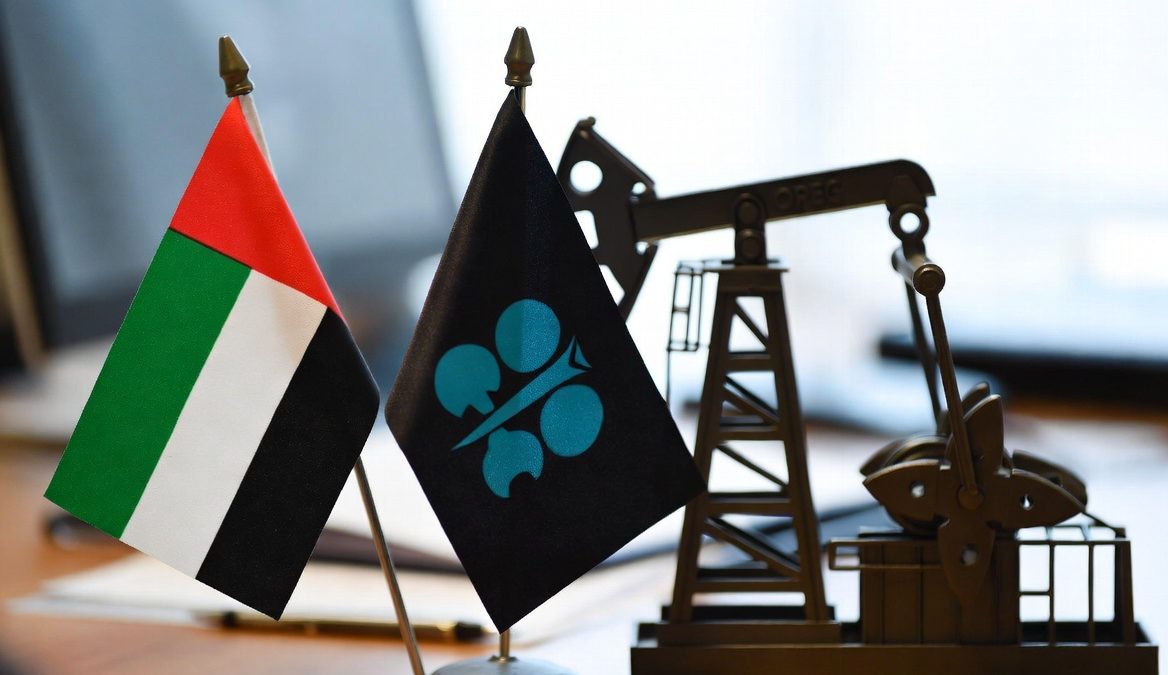
By The United Arab Emirates’ surprise exit from OPEC marked a turning point in global energy politics, signalling a shift from cartel discipline to a market-driven strategy, even as the Strait of Hormuz remains choked by war disruptions.
The move ended nearly six decades of membership and removed the cartel’s third-largest producer, marking one of the most consequential departures in OPEC’s history.
In an exclusive interview with Invezz, Maleeha Bengali of MB Commodities Capital unpacks why the UAE is defying Saudi-led production caps — and what it means for oil prices, OPEC’s unity, and global energy markets.
Bengali told Invezz that the departure will weaken OPEC+ influence on the oil market as the UAE looks to maximise oil revenue.
Below are edited excerpts;
Invezz: What does the UAE’s exit from OPEC really signal about its long-term energy strategy?
Maleeha Bengali: It is looking to maximise oil revenue rather than adhere to an OPEC forced limit structure, which is mostly managed by Saudi Arabia.
The two countries have different fiscal breakeven oil prices post-expansion plans.
Also, the UAE has been hit more because of the war, so it is looking to make up for that as much as it can.
Invezz: How significant is the timing of this decision, coming amid the ongoing Strait of Hormuz disruptions?
Maleeha Bengali: It is not going to impact prices today, but it is setting itself up to pump as much as it can, free for all markets once the Strait opens or war settles down.
Also, there has been a growing difference in their regional alliances too (Pakistan/Egypt/Turkey/Iran) vs the UAE, which is more allied with Israel and the United States.
As the war drags on, the map is changing, so the decision comes hand in hand. It is starting to think for itself.
OPEC’s influence weaken
Invezz: Will the UAE’s departure weaken OPEC+ cohesion in the short term or long term?
Maleeha Bengali: UAE’s departure will weaken the influence of OPEC going forward, as the UAE and Saudi Arabia were the two members with the highest spare capacity and could hence reduce or increase production to maintain the level of prices they desired.
The UAE possesses an oil production capacity of up to 5 million barrels per day. However, its output has been constrained by OPEC’s established quota limits.
Once the oil flow stabilises or the UAE successfully reroutes it through an alternative pipeline, it will no longer be restricted by the OPEC quotas.
Saudi Arabia will be the majority member in the group, as even Russia is looking to pump as much as it can, as they need prices above $75/bbl to fund their war against Ukraine.
The other members in the group are too small to make an impact but they will widely follow Saudi Arabia, but OPEC as a group and its influence will be less and less going forward. It will be more about market share and Saudi Arabia will not be cutting production to maintain higher prices if UAE is pumping at will.
It will definitely weaken OPEC’s cohesion, as it is now mostly Saudi Arabia that has the most spare capacity – the UAE had spare capacity too.
Production and impact on prices
Invezz: How much additional oil can the UAE realistically bring to the market now that it is no longer bound by quotas?
Maleeha Bengali: The UAE’s oil production, which had dropped to 2.2 million barrels per day (bpd) from a pre-war level of approximately 3.8 million bpd, is now limited by its OPEC+ quota of around 3 million bpd, despite having a production capacity of about 5 million bpd.
The country is exploring alternative options for increasing exports.
Currently, the rerouted pipeline can handle a maximum of 1.8 million bpd, but the UAE is developing a new pipeline to expand its export capability.
Invezz: Is this move primarily driven by economics, geopolitics or both?
Maleeha Bengali: Economics is a big factor. Geopolitically, the UAE has been aligned more with the US/Israel during this Iran war; their policies over the past few years in Somalia/Sudan and their disagreements with Saudi Arabia were quite apparent.
But it had always listened to Saudi Arabia. Since the Abraham Accords signing in 2020, this has changed the UAE and its desire to be a bigger player in the region.
The underlying competition between Saudi Arabia and the UAE often went unnoticed because the Middle East was typically viewed as a unified entity.
Currently, the post-war landscape, particularly their differing alliances with countries like Iran and Pakistan, is further driving them apart.
Invezz: What impact will this have on global oil prices in the coming months?
Maleeha Bengali: If we get a ceasefire, prices will be in the range of $80-$85/bbl.
That will take time to come back, but it all depends on whether the US and Israel decide to attack Iran again and take out its infrastructure.
It is a dynamic situation that is changing day by day.
But longer term, I do not see oil being an issue as flows are making their ways and finding alternate routes. Long term, once things normalise, prices would be back in the $65-$70/bbl range.
Fallout from the UAE move
Invezz: How should other OPEC members respond to the UAE’s decision?
Maleeha Bengali: Each of the current OPEC members is likely to follow its own policy, as they are not as big as Saudi Arabia or the UAE.
Countries with higher production capacity, such as Iran or Venezuela (whose actions are currently influenced by the US), will likely seek to increase their output.
Invezz: Will this decision strengthen or weaken the UAE’s influence in global energy markets?
Maleeha Bengali: Now that the UAE will produce and pump based on pure economics, it means the oil market will be free to move based on demand/supply and not be price controlled.
So their market share will be higher as they will pump more at higher prices and vice versa.
Risks and opportunities
Invezz: What are the biggest risks and opportunities for the UAE after leaving OPEC?
Maleeha Bengali: The biggest risk is that it is firmly aligned with Israel and the United States and against Iran, its closest neighbour.
So defense is critical for them now, but also for future conflicts.
Their opportunities are being a bigger player and more involved in expansionist policies in Africa and on the world stage, aligned with the US and Israel.
Also, this will change the way expats view the UAE as a place to do business, given the strict financial controls and image rebuilding that will be required.
They will do well, but the mix will change, and the risk premium as well. The UAE will no longer be a safe haven by default.
We’re already seeing money moving to Hong Kong and Singapore, for example, as investors have other choices.
Invezz: Finally, which are the oil-consuming countries that might benefit from the UAE’s departure from OPEC?
Going forward, prices will be based on real demand and supply and not artificially held back due to production curbs.
Oil prices were too high prior to the war to begin with, despite all the spare capacity.
We have argued that post COVID-19, and before the Iran war, the real price of oil should have been about $50-$60/bbl, but OPEC deliberately held back 10 million barrels per day of oil for a lot longer than needed, and then Saudi Arabia did extra voluntary cuts for an additional three years before raising production finally.
I have argued that if they let the supply be as it is, the oil market would have found balance a lot earlier, and demand would have been able to recover better.
But OPEC kept holding back production as they were too scared to let prices fall.
Short term pain for long term gain is better, but they have invested too much and need oil dollars to pay for their plans.
Near term, countries are not benefiting as there is a supply outage, but over time they will be more free for all market share.
The post Interview: MB Commodities' Maleeha Bengali on why UAE just walked out on OPEC appeared first on Invezz
