
 By
By Overview
Guide to the VWAP Strategy Topics
Let’s get into how I actually use the VWAP trading strategy in real markets. I’ll show you the setups, how I think about risk, and what I watch for around those key levels.
You’ll see how I treat the volume-weighted average price as an intraday benchmark, how it stacks up against the EMA, and how I put together repeatable VWAP setups.
Main areas covered:
- Core ideas behind the VWAP indicator
- My reasons for using it in day trading
- Long and short VWAP entry models
- Advanced indicators like anchored VWAP (AVWAP)
- Pros and limits of VWAP trading
- Common questions traders ask
Understanding the Volume-Weighted Average Price
VWAP stands for volume-weighted average price. It’s the average price of a stock during the day, but it’s weighted by trading volume.
Unlike a plain moving average, VWAP actually cares about both price and cumulative volume. The formula multiplies the typical price by volume to get cumulative TPV (total price volume), then divides by total volume.
VWAP calculation basics:
| Step | Component |
|---|---|
| 1 | Calculate typical price (high + low + close ÷ 3) |
| 2 | Multiply typical price by volume |
| 3 | Add cumulative TPV |
| 4 | Divide by cumulative volume |
The line resets every new trading session. VWAP works best on intraday charts like 1-minute, 5-minute, or 15-minute time frames.
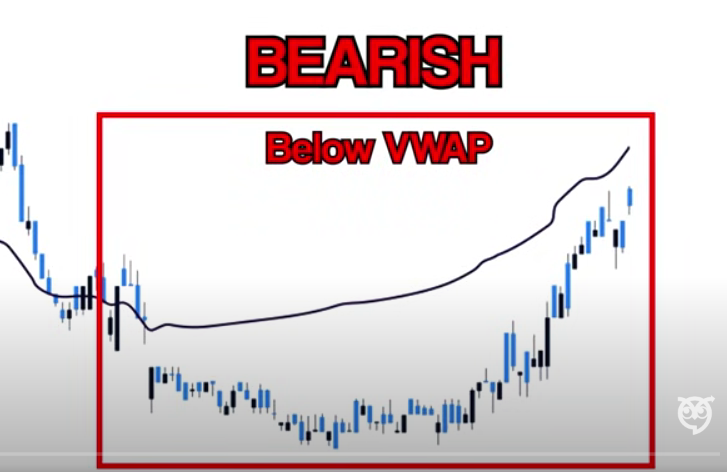
If price trades above VWAP, buyers are in control short term. When it’s below, sellers have the upper hand.
Why I Rely on VWAP in My Trading
I don’t like to apply too many indicators on my charts. Most of the time, it’s just the VWAP indicator and volume analysis.
VWAP gives me a fast read on sentiment and helps me spot institutional order flow. A lot of big players use it as their execution benchmark, so it’s handy to watch.
What I like about VWAP indicator is:
- It works in both small-cap and large-cap stocks
- It supports long and short trading
- It reacts well to intraday liquidity shifts
- It helps with trend identification
VWAP moves as the session unfolds. It shifts with price and volume, giving me a live look at the current trend.
Applying VWAP to Intraday Trading
I put VWAP to work in day trading with structured setups. My focus is always on clean price action, strong volume, and clear risk management.
VWAP Break Above (Long Setup)
The VWAP breakout on the long side happens when price crosses above VWAP with real volume behind it.
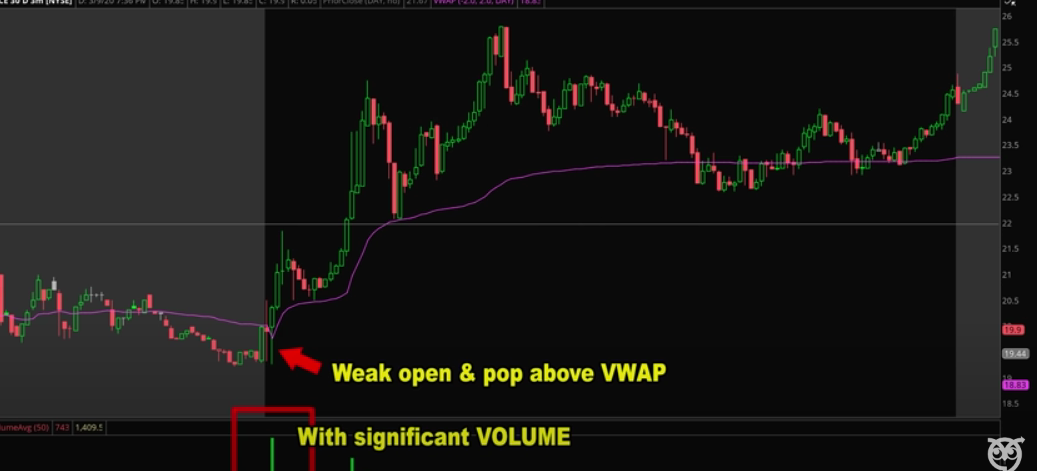
Entry idea #1:
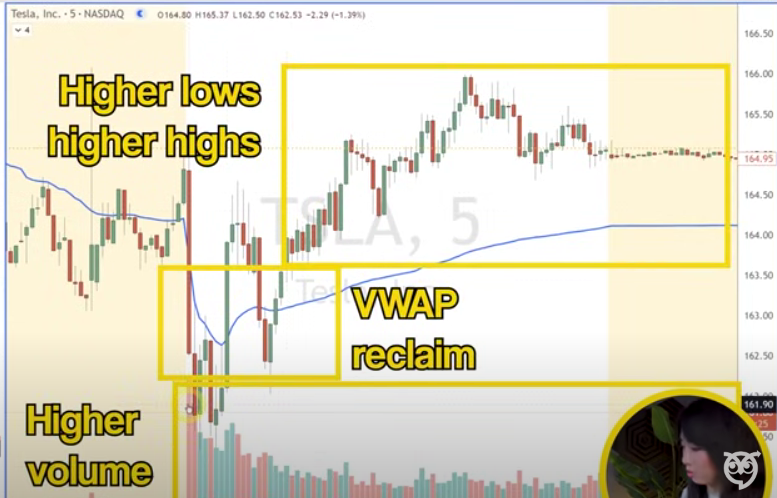
Price reclaims VWAP after being under it. There’s a clear volume push during the move.
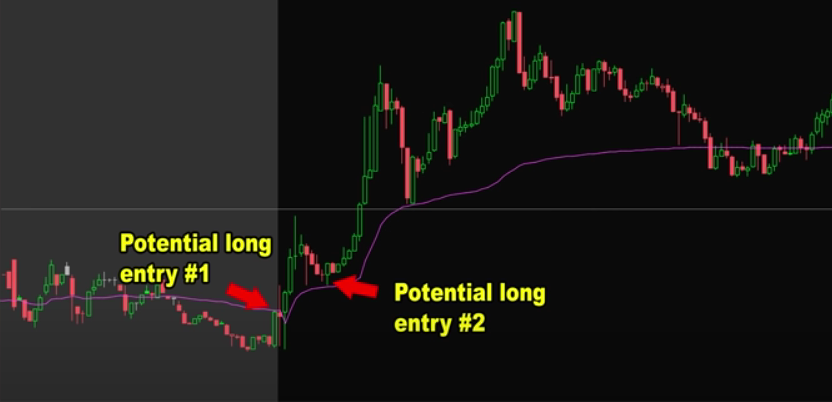
Entry idea #2:
Price pulls back to VWAP after the breakout. Selling volume dries up, and buyers show up near VWAP support.
I don’t set my stop loss right on VWAP. Those little wicks can knock you out early, so I use nearby structure instead.
I’ll stay in the trade if price holds above VWAP and keeps making higher highs and higher lows.
Stuff that makes me cautious:
- Choppy moves around VWAP
- Lower highs showing up
- More selling volume creeping in
VWAP Break Below (Short Setup)
The VWAP pullback on the short side is when price trades below VWAP and just can’t get above it.
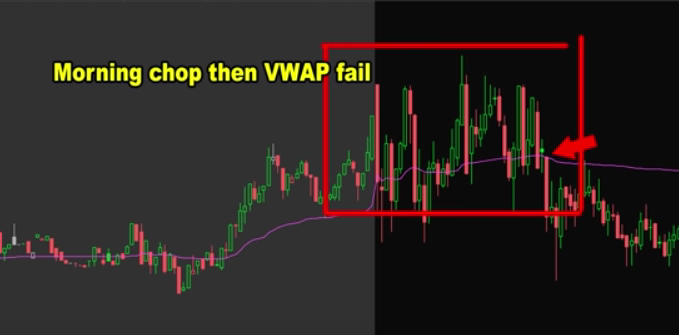
Entry idea #1:
Price rallies up into VWAP resistance and gets smacked down with heavy selling volume.
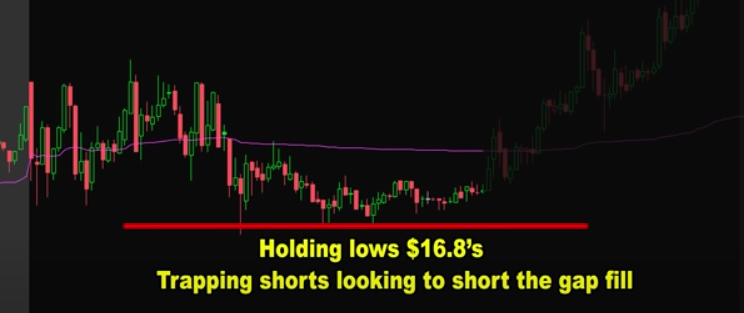
Entry idea #2:
Price retests VWAP again, but there’s weak buying and it fades away.
I manage the trade while price stays under VWAP and treats it as resistance.
Reversal signs I’m watching for:
- Tight chop below VWAP
- Buying volume picking up
- Higher lows sneaking in
Advanced Tactics and Lessons I Learned
My VWAP trading has definitely changed over time.
1. Strong Entry Rules
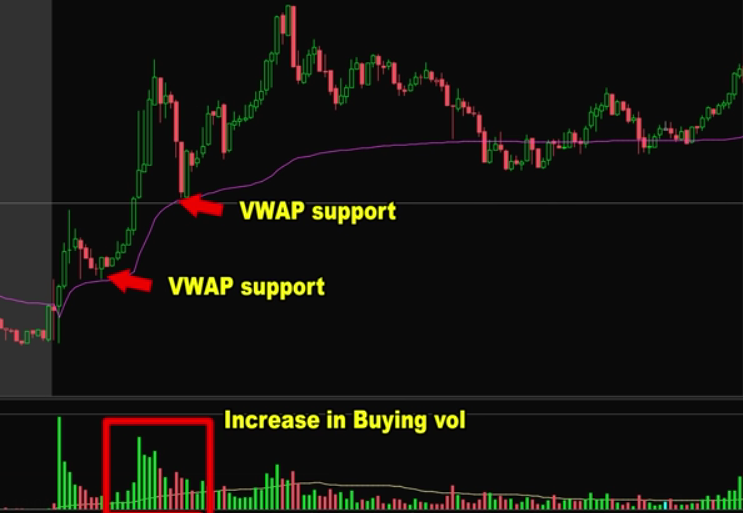
For bullish trades, I want to see:
- A clear VWAP reclaim
- Higher highs and higher lows
- Buying volume building up
For bearish trades, I’m looking for:
- VWAP rejection
- Lower highs and lower lows
- Steady selling pressure
These rules help filter out fake breakouts and make backtesting results a bit more reliable.
2. VWAP as Support and Resistance
VWAP acts like dynamic support and resistance a lot of the time.
Price often reacts right at VWAP, whether it’s a trend day or just a range day. On strong trend days, price can just ride above VWAP for hours. On choppy days, it’ll cross back and forth a bunch.
I leverage the VWAP indicator as a key level. If price breaks and holds above or below, I start planning for a possible shift.
3. Using Anchored VWAP
I use anchored VWAP (AVWAP) too.
Instead of resetting every day, anchored VWAP starts from a big event like:
- Earnings
- News release
- Gap up or down
- Major swing high or low
AVWAP lets me track longer-term support and resistance—super useful if you want to see how price reacts to past events.
4. VWAP Bands and Standard Deviation
Some traders add VWAP bands using standard deviation around VWAP.
These bands work kind of like Bollinger Bands. They show when price is stretched away from the mean.
If price gets way out there with extreme volume, I’m on alert for either:
- A breakout continuation
- A snap back toward VWAP
5. Avoiding VWAP Mistakes
Some classic VWAP mistakes:
- Ignoring volume
- Trading every cross blindly
- Using it on the wrong time frame
- Forgetting about overall market conditions
VWAP works best when you actually use risk management and confirm what you see with price action.
VWAP Compared to Exponential Moving Average
People always ask how VWAP stacks up against the EMA (exponential moving average).
Here’s a quick side-by-side:
| Feature | VWAP | EMA |
|---|---|---|
| Includes volume | Yes | No |
| Resets daily | Yes | No |
| Used as intraday benchmark | Yes | Rarely |
| Good for execution quality tracking | Yes | No |
EMA just reacts to price. VWAP cares about both price and trading volume.
I’ll use EMA for bigger-picture trend on higher time frames. VWAP is my go-to for intraday precision.
Strengths of VWAP Trading
VWAP’s got some clear perks:
- Solid intraday benchmark
- Helps spot institutional activity
- Defines trend direction
- Improves entry timing
- Works for breakout and pullback setups
It also plays well with volume profile tools, especially near high-volume nodes.
Combining VWAP with backtesting helps me measure win rate, drawdown, and consistency.
Weaknesses and Limits of VWAP
VWAP isn’t perfect.
- Lags during sharp reversals
- Resets daily, so not great for swings
- Doesn’t work well in illiquid stocks
- Can throw false signals in choppy markets
On big news days, price might just ignore VWAP altogether.
That’s why I always check:
- Overall market trend
- Daily chart levels
- Bigger support and resistance zones
Final Thoughts on VWAP Usage
For me, VWAP is a framework, not a magic signal.
I combine it with volume, price structure, and strict risk control. I keep an eye on execution and try to avoid those emotional “FOMO” entries.
If you want reliable charting platforms and scanning tools, check out my favorite day trading tools. For low-cost platforms with solid fills, here’s my list of recommended trading brokers.
Join My Trading Community for Deeper VWAP Training
Inside my community, I walk through real intraday setups. I break down VWAP entries, breakout failures, and pullback reviews.
Members get to learn how to:
- Spot VWAP rejection
- Trade VWAP breakout setups
- Avoid short traps
- Tell trend days from range days
- Dial in risk management
My focus is always on practical execution, not just theory.
Common Questions About VWAP Trading
Is VWAP good for beginners?
Yep, it’s a clear reference for trend and fair value.
Can I use VWAP for swing trading?
Regular VWAP resets daily. For swings, anchored VWAP is the way to go.
Does VWAP work on all time frames?
It’s best on intraday charts.
Should I combine VWAP with other indicators?
I keep it simple. Most days, it’s just VWAP and volume for me.
Typical VWAP Trading Approaches
Here are some common VWAP setups traders use:
- VWAP Breakout Strategy – Trade when price breaks and holds above or below VWAP with strong volume.
- VWAP Pullback Strategy – Enter on a retrace to VWAP during a clear trend.
- VWAP Rejection Trade – Short or long when price fails at VWAP.
- Mean Reversion with VWAP Bands – Trade back toward VWAP after price gets stretched away from it.
- Anchored VWAP Setup – Use AVWAP from a major event level.
Every approach needs discipline, volume confirmation, and tight risk management.
I always test new setups on old intraday charts before risking real money. Keeps my strategy honest and measurable.
Frequently Asked Questions
How I Read VWAP to Spot Trend and Entry Opportunities During the Day
I trade with the VWAP indicator to figure out who’s really in control during a session. If price hangs out above VWAP, buyers are probably running the show.
If price is chilling below it, then sellers are calling the shots. That’s my basic read.
For trend trades, I watch for pullbacks toward VWAP. When price dips into it or just taps it and then gets rejected, that’s when I start thinking about an entry in the direction of the trend.
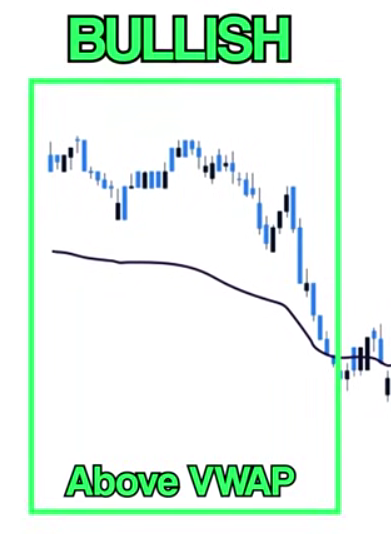
For quick reference:
- Above VWAP + higher highs = bullish bias
- Below VWAP + lower lows = bearish bias
- Flat VWAP + choppy price = range conditions
If price keeps crossing over VWAP back and forth, I usually stay out. That kind of action just screams indecision to me.
What Time Frame I Prefer for Intraday Trading and Session Resets
I stick with VWAP on intraday charts—usually the 1-minute, 3-minute, or 5-minute time frames. If I’m scalping, I like the 1- or 3-minute charts best.
For slightly slower trades, I gravitate toward the 5-minute. It’s slower and much easier to follow.
I always make sure my VWAP resets at the start of each trading day. VWAP’s all about the average price for that session, so if it doesn’t reset, the info just gets muddy for day trading.
Sometimes I’ll peek at a higher time frame like the 15-minute for context, but my entries are on the faster charts.
The VWAP Settings and Bands I Use for Day Trading and Scalping
I stick with the standard VWAP settings. No need to mess with the core formula—it works as is.
Sometimes I’ll throw on standard deviation bands around VWAP to spot when price is getting a bit stretched.
Here’s a common band setup I use:
| Band Level | Purpose |
|---|---|
| +1 / -1 | Mild extension |
| +2 / -2 | Strong extension |
| +3 / -3 | Extreme stretch |
When I’m scalping, my attention is on quick reactions near the first band. For trend trades, I watch the outer bands for possible pullbacks.
I try to keep my charts clean. Too many indicators just get in the way.
How I Combine VWAP With Volume, Support and Resistance, and Moving Averages
I always confirm VWAP signals with volume. If price is moving hard away from VWAP, I want to see strong volume behind it.
Weak volume? That usually means the move won’t stick. I don’t trust breakouts without some real juice.
I also mark these levels on my chart:
- Previous day high and low
- Premarket high and low
- Key support and resistance levels
If VWAP lines up with any of those, I pay extra attention. It’s like a little bonus signal.
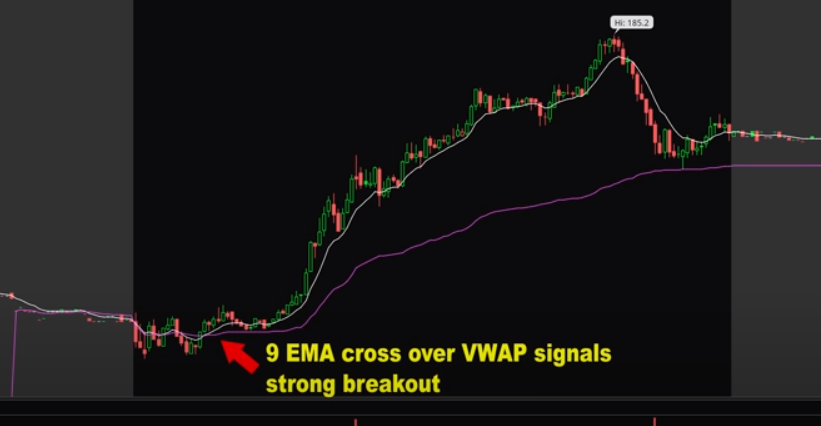
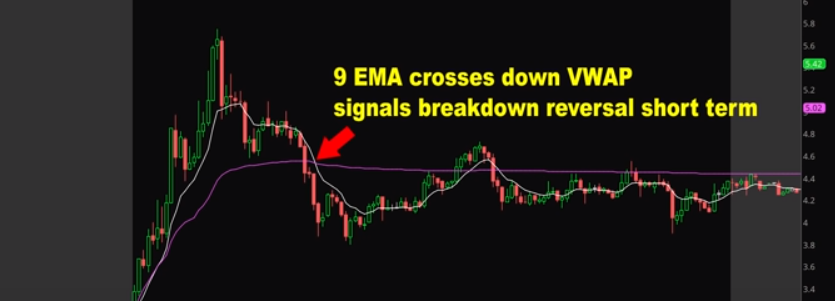
Sometimes I’ll use a short moving average, like the 9 EMA. If price is holding above both VWAP and the EMA, that’s when I get more confident the move has legs.
The Biggest VWAP Mistake Beginners Make
Most beginners treat VWAP like some magic buy/sell line.
That’s usually why they get chopped up.
A lot of traders misuse VWAP, but I try to dodge these traps:
- Trading every single touch of the line
- Ignoring the bigger market trend
- Forgetting to check volume for confirmation
- Jumping in far from VWAP after a big move
I steer clear of fighting strong trends too. If price is trending way above VWAP all day, shorting every extension is a terrible mistake to get used to.
Patience matters—a lot. I wait for structure and some real confirmation before pulling the trigger.
How I Create Clear Rules for Entries, Exits, and Risk Control
First, I figure out if I’m trading mean reversion or trend continuation. Mixing both without a plan? That’s just asking for trouble.
For mean reversion:
- Enter near outer VWAP bands.
- Look for signs that momentum is slowing down.
- Target a move back toward VWAP.
- Stops go beyond the recent extreme.
For trend continuation:
- Wait for a pullback to VWAP.
- Jump in after price clearly rejects that level.
- Target prior highs or lows, depending on the direction.
- Stops are set below the pullback low if I’m long, or above the pullback high if I’m short.
I risk a fixed percentage of my account on each trade. Before I get in, I know exactly where my stop loss is.
Moving a stop farther out just to dodge a loss? Nope, I don’t do that.
Don’t feel like reading? Watch the video.
The post VWAP Strategy: How I Use VWAP for Day Trading Setups appeared first on Humbled Trader.
