
 By
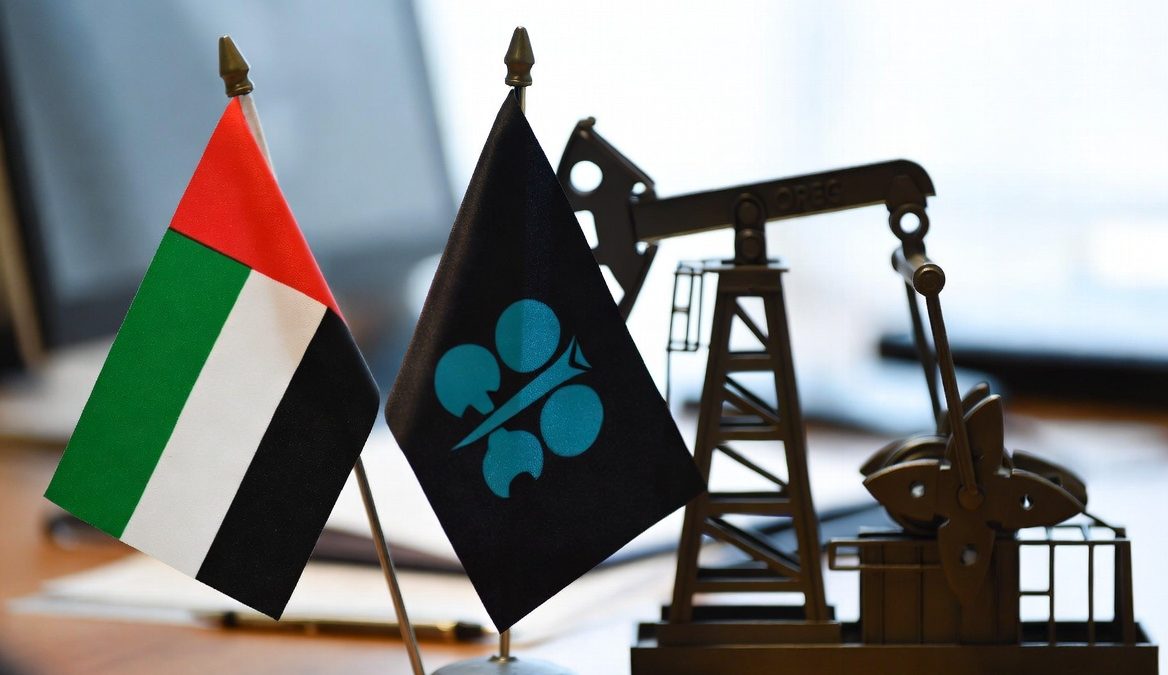
By In a seismic shift for the global oil market, the United Arab Emirates has confirmed its exit from OPEC and OPEC+, effective May 1.
The move, announced Tuesday by the country’s state news agency WAM, ends nearly six decades of membership and removes the cartel’s third-largest producer, marking one of the most consequential departures in OPEC’s history.
The market was already vulnerable when the announcement was made.
This is the ninth week of the Iran War, the Strait of Hormuz is essentially closed, and crude oil prices have been consistently trading above $100, and sometimes $110.
At the time of writing, the most-active Brent crude oil contract on the Intercontinental Exchange was at $110.91 per barrel, up 2.4% from the previous close.
Quota discontent and diplomatic strain
The UAE’s long-simmering discontent with its OPEC+ production quota, largely dictated by Saudi Arabia, had escalated.
Despite having a capacity of over 4 million barrels per day (bpd) and an ambitious target for ADNOC to reach 5 million bpd by 2027, Abu Dhabi has been restricted to an output of roughly 3 million bpd under the deal.
This constraint clashes significantly with its strategic market goals.
The diplomatic strain reached a breaking point due to the conflict in Yemen.
The relationship between the two Gulf powers deteriorated after Saudi forces intercepted an alleged UAE-linked weapons shipment destined for southern Yemen, an action followed by airstrikes on the port of Mukalla.
Abu Dhabi has denied supplying separatists.
“This decision follows a comprehensive review of the UAE’s production policy and its current and future capacity and is based on our national interest and our commitment to contributing effectively to meeting the market’s pressing needs,” the UAE’s Ministry of Energy and Infrastructure said in a statement.
While near-term volatility, including disruptions in the Arabian Gulf and the Strait of Hormuz, continues to affect supply dynamics, underlying trends point to sustained growth in global energy demand over the medium to long term.
Abu Dhabi’s strategic pivot positions it as a peer to OECD economies, distinct from other members of the cartel.
This is underscored by a $100 billion clean energy partnership with Washington and a national commitment to net-zero emissions by 2050, making continued OPEC membership increasingly difficult to reconcile.
Limited immediate impact, significant long-term trend
However, the immediate impact of such an exit on the global oil market is likely to be less significant than the headline suggests.
While leaving OPEC theoretically frees up the UAE’s production capacity, practical limitations remain.
Due to the ongoing Hormuz crisis, the majority of this potential production is currently offline.
The US Energy Information Administration (EIA) estimates that Gulf producers collectively idled about 9.1 million barrels per day in April, underscoring the fact that the UAE cannot pump oil it cannot transport.
The more significant impact, however, lies in the long-term trend of member departures, following the examples of Qatar (2019), Ecuador (shortly after Qatar), Indonesia (suspended membership in 2016), and Angola (2023).
“Following its exit, the UAE will continue to act responsibly, bringing additional production to market in a gradual and measured manner, aligned with demand and market conditions,” according to the statement.
“This decision does not alter the UAE’s commitment to global market stability or its approach based on cooperation with producers and consumers. Rather, it enhances the UAE’s ability to respond to evolving market needs.”
The cartel faces a major challenge with the loss of a founding-era member and its third-largest producer amid ongoing conflict, putting pressure on Saudi Arabia and Russia to maintain group cohesion.
A potential departure by the UAE was previously identified by the Baker Institute as a significant event, warning it would be “the most high-profile departure from the group to date, overshadowing Qatar’s 2019 exit.”
Historically, OPEC has demonstrated resilience, having overcome significant internal conflicts, including the Iran-Iraq War, the collapse of Venezuela’s production, and the 2020 price war between Saudi Arabia and Russia.
The post UAE quits OPEC in seismic shift, but Hormuz crisis halts freed-up oil appeared first on Invezz
