
 By
By As Brent crude prices soar amid escalating tensions in the Gulf, the oil trading landscape faces unprecedented challenges, according to Baron Lamarre, co-founder of International Digital Exchange, an expert in energy markets and former trader at Petronas and Shell.
In an interview with Invezz, Lamarre highlighted how traditional oil trading is being stress-tested at its weakest points—documentation, credit intermediation, and shipping risks—just as the market demands rapid responses to supply disruptions.
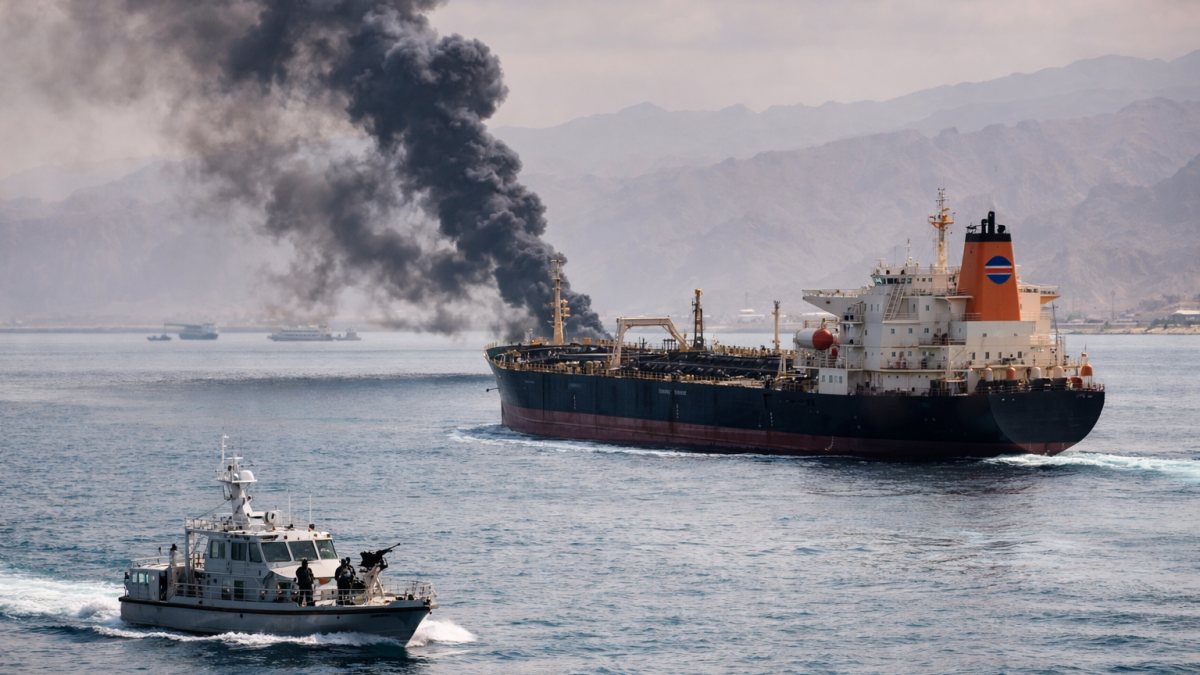
The current Strait of Hormuz crisis has intensified concerns over global oil supply, as geopolitical tensions threaten one of the world’s most critical maritime chokepoints for energy transport.
Brent crude oil prices have surged to near four-year highs, with the benchmark currently trading around $115 per barrel.
He argues that while tokenised platforms like INDEX/LITRO cannot eliminate the physical shocks of geopolitical crises, they can significantly accelerate financial responses, allowing for quicker ownership transfers and collateral movements.
Lamarre emphasises that the current geopolitical climate serves as a real-time stress test for both traditional and tokenised markets.
He notes that on-chain derivatives could act as “thermometers” for geopolitical risk, revealing market stress faster than conventional trading methods.
However, he warns that the speed of these platforms could also amplify volatility, particularly if leveraged positions are involved.
As the energy sector grapples with rising costs and potential supply shortages, Lamarre advises commercial operators to prioritise securing physical supplies while leveraging digital tools for efficiency. The convergence of high oil prices and crypto markets, he suggests, could create both risks and new arbitrage opportunities, fundamentally reshaping how traders navigate future geopolitical oil shocks.
Below are edited excerpts:
Invezz: With Brent crude surging amid fresh attacks on energy infrastructure in the Gulf, how are these disruptions testing traditional oil trading versus emerging tokenized platforms like LITRO?
Baron Lamarre: Traditional oil trading is being stress-tested exactly where it has always been weakest: documentation, credit intermediation, shipping risk, and time to settlement. In that environment, the legacy system becomes slower and more expensive precisely when the market needs speed.
A tokenised platform like INDEX/LITRO would not remove the physical shock — if supply is interrupted, the underlying commodity is still disrupted — but it could compress the financial response time.
If reserves are already verified and tokenised, ownership transfer, collateral movement, and settlement can happen much faster than paper-heavy trade finance channels. So the distinction is this: traditional markets absorb the shock through delays and frictions; a INDEX/LITRO-style market is designed to absorb it through faster repricing and faster balance-sheet mobility.
Invezz:Geopolitical shocks have historically hit physical oil hardest—do you see on-chain derivatives and tokenised commodities now acting as real-time “stress tests” that amplify volatility across global markets?
Baron Lamarre: Yes, potentially both as stress detectors and as volatility transmitters. Because tokenised commodity rails can trade around the clock and reprice instantly, they could show stress faster than traditional bilateral oil workflows.
In that sense, they become real-time thermometers for geopolitical risk. That is especially relevant when the physical benchmark itself is swinging sharply, as Brent has during the current Strait of Hormuz crisis.
But faster price discovery can also amplify moves if leverage is layered on top. On-chain derivatives reduce latency, not risk. If a tokenised oil product is widely used as collateral or embedded in leveraged structures, then supply headlines can cascade into margin calls much more quickly than in slower OTC markets. The advantage is transparency; the danger is reflexivity.
Invezz: How is the convergence of high oil prices, DeFi leverage, and crypto markets accelerating liquidations and broader risk-off moves right now?
Baron Lamarre: The transmission channel is macro first, crypto second. When energy spikes at the same time broader markets wobble, leveraged crypto positions become more fragile because traders start de-risking across the board, not just in energy-linked assets.
In DeFi, that means a higher probability of collateral stress, especially where users are already leveraged or funding positions with short-duration borrowing. So the mechanism is: oil shock raises inflation risk, inflation risk raises rate sensitivity and risk aversion, and risk aversion increases liquidation pressure in crypto.
On-chain commodity products may create arbitrage opportunities, but they also add another fast-moving source of collateral volatility.
Invezz:As fuel costs spike for airlines, shipping, and industry due to Middle East tensions, what hedging strategies should commercial operators adopt in both spot and digital commodity markets?
Baron Lamarre: Commercial operators should still build hedges from the physical world outward: secure physical supply first, then layer financial hedges. For airlines, shipping companies, and industrial buyers, that usually means a blend of fixed-price forward purchases, rolling call-option protection, and basis management against the benchmark they actually consume. The current crisis has shown how quickly fuel and feedstock costs can jump when Hormuz flows are disrupted.
In digital markets, the discipline should be the same: hedge what you physically need, avoid over-leverage, and match duration carefully.
A INDEX/LITRO-style token could be useful for inventory financing, short-term price exposure, or rapid collateral movement, but commercial operators should not treat tokenization as a substitute for a full risk program.
The right model is hybrid: physical contracts for certainty, benchmark derivatives for price protection, and tokenised inventory or settlement rails for speed and working-capital efficiency.
Invezz:Tokenisation promises 24/7 settlement and transparency—could LITRO-style projects help stabilise or instead magnify swings during supply crises like the current Strait of Hormuz threats?
Baron Lamarre: They could do either, depending on market design. They help stabilise markets when they improve transparency around reserves, collateral, ownership, and settlement, because participants can see where risk sits and move capital faster. LITRO emphasizes verified reserves, tokenisation at one litre per token, and a settlement model intended to be more transparent than legacy oil finance.
They magnify swings if they attract speculative leverage without strong guardrails. In a supply crisis, a 24/7 market can gap more quickly than a slower market, especially if liquidity is thin or redemption terms are not operationally robust.
So the answer is not “tokenisation is stabilising” or “tokenisation is destabilising.” The answer is that governance, collateral rules, redemption design, and market depth determine which way it goes.
Invezz:With oil benchmarks hitting near four-year highs, what lessons from your Petronas and Shell-era trading apply to today’s energy-DeFi crossover?
Baron Lamarre: The first lesson from my hands-on experience is that logistics still dominate finance in a real oil shock. When physical routes are threatened, price is only part of the problem; timing, insurance, vessel access, and optionality matter just as much.
Recent news reports on the Hormuz disruption make that very clear, with one-fifth of global oil and LNG shipments exposed and alternative routes unable to fully offset the loss.
The second lesson is that in volatile markets, liquidity and credit discipline matter more than prediction. In an energy-DeFi crossover, that means not confusing fast settlement with low risk.
The market will reward platforms that pair blockchain speed with old-school commodity controls: verified inventory, conservative collateralization, and credible delivery mechanics. That is exactly why INDEX/LITRO’s public positioning around verified reserves and physical redemption is strategically important.
Invezz:How might prolonged Middle East conflict and emergency stock releases (e.g., IEA’s recent moves) affect liquidity and pricing in tokenized oil assets?
Baron Lamarre: A prolonged conflict would likely make tokenised oil assets more relevant for financial mobility but more volatile in price.
The International Energy Agency estimates global oil demand at around 104–105 million barrels per day in 2026, while Barclays sees a prolonged Hormuz disruption risking 13–14 million barrels per day of supply loss. In that type of environment, any token linked to physical crude should trade with a strong geopolitical premium.
Emergency stock releases can moderate price spikes at the margin, but they do not eliminate risk if the disruption persists. For tokenised oil, that means two things: benchmark-linked prices may cool temporarily on policy action, but demand for transparent, rapidly transferable oil exposure could still rise because market participants want flexible collateral and liquidity tools while physical logistics remain stressed.
Invezz:Institutional investors are watching oil’s spillover into Bitcoin and altcoins—do you expect energy volatility to cap crypto rallies or create new arbitrage opportunities via on-chain commodities?
Baron Lamarre: Both, but in different time frames. In the short run, energy volatility is more likely to cap crypto rallies because it raises inflation risk, worsens risk sentiment, and tightens financial conditions.
Recent reporting shows oil spikes coinciding with equity weakness and broader concern about inflation and growth. That backdrop is not friendly to indiscriminate crypto beta.
Over time, though, on-chain commodities could create new arbitrage paths: benchmark dislocations, regional basis trades, collateral transformation, and cross-market spread opportunities between traditional oil instruments and tokenised exposure.
If platforms like INDEX/LITRO launch with credible reserve verification and redemption, they could give investors a new bridge between macro energy views and digital-asset execution.
Invezz:What risks do leveraged DeFi positions face if oil-driven inflation forces tighter monetary policy in the coming weeks?
Baron Lamarre: The biggest risks are rising funding stress, falling collateral values in correlated risk assets, and faster liquidations. If oil stays elevated, central banks or rate markets may price tighter conditions for longer. That hurts duration-sensitive and speculative assets first, which is why a commodity shock can become a crypto deleveraging event even if the original trigger is outside crypto.
For DeFi specifically, the danger is correlation under stress. Traders often assume diversification, where, in a real macro shock, everything risky sells off together.
So if oil-driven inflation pushes rates expectations higher, leveraged DeFi users should expect thinner liquidity, sharper collateral haircuts, and more brutal liquidation cascades than in a purely crypto-native selloff.
Invezz:Looking ahead to LITRO’s 2027 launch, how will tokenised physical crude change how traders and producers navigate future geopolitical oil shocks?
Baron Lamarre: If LITRO launches as publicly described, the biggest change will be that producers and traders may be able to separate financial mobility from physical movement more effectively.
In a crisis, you may not be able to move barrels quickly through a chokepoint, but you may still be able to transfer title, collateralise verified reserves, raise liquidity, or rebalance exposure much faster on a tokenised platform than through traditional trade-finance channels. That could materially improve working capital and response time during geopolitical stress.
The most important caveat is that tokenisation does not repeal geopolitics. It does not create ships, ports, insurance, or spare capacity.
What it can do is reduce paperwork drag, shorten settlement cycles, improve transparency, and give the market a faster mechanism to distribute risk and capital.
So the long-term value proposition is not that tokenised crude removes oil shocks; it is that it helps the industry respond to them with more speed, flexibility, and capital efficiency.
The post Interview: Hormuz shock exposes legacy oil trade's flaws: Baron Lamarre appeared first on Invezz
